
I.Description
1.1. Product Introduction
2.4-inch Display, ILI9341 Driver, 320×240 Resolution
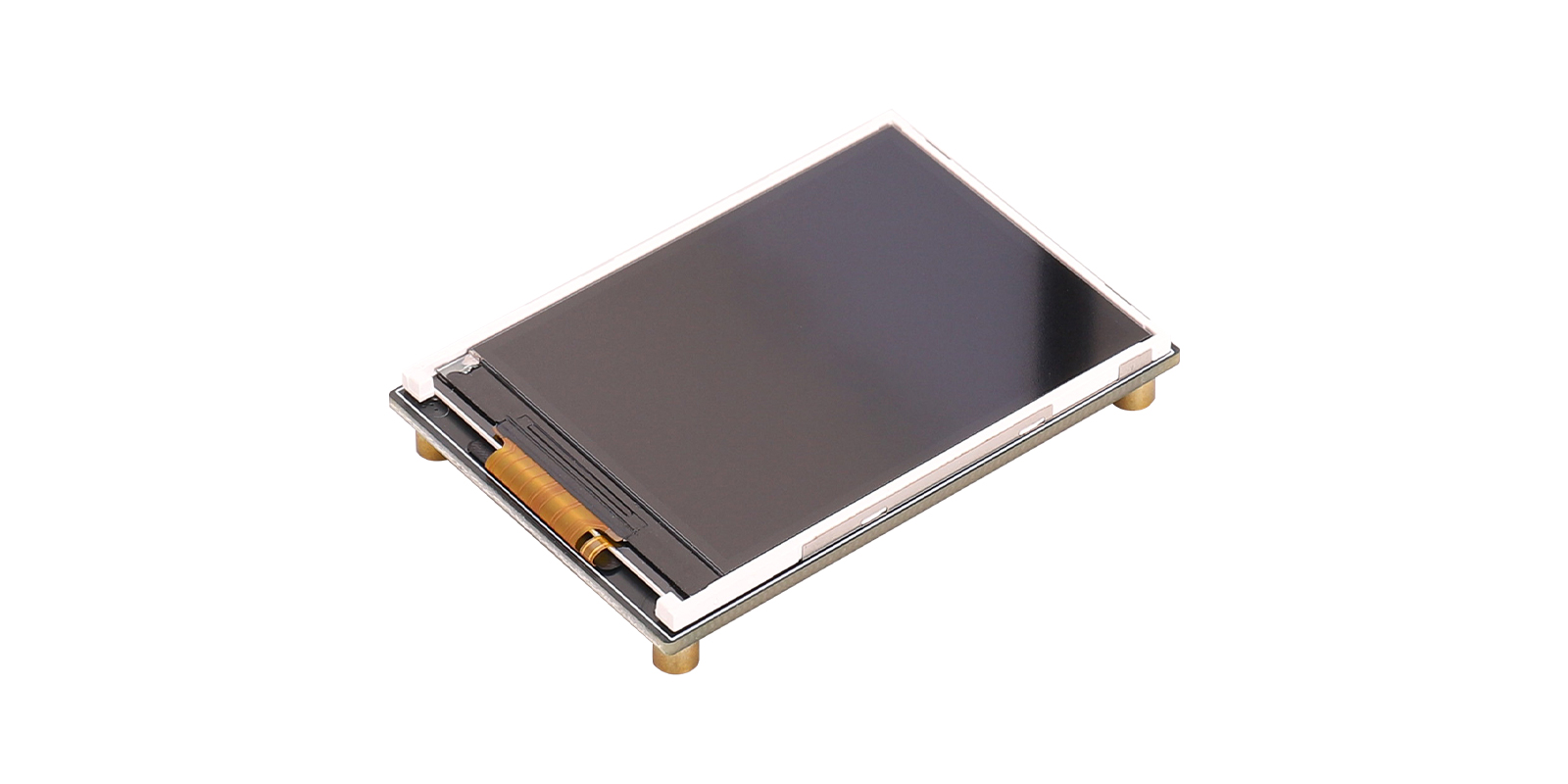
This 2.4-inch LCD display features a resolution of 320×240, delivering clear and stable image quality suitable for various small-size display interface applications. The product utilizes the ILI9431 display driver IC, facilitating system development and rapid integration to meet the application requirements of embedded devices for display modules. The overall board dimensions align with the screen size, offering a compact structure that optimizes internal space within the final product, making it particularly suitable for designs with strict volume and mounting layout requirements. The interface uses an 8-pin connector with a 1.25mm pitch, providing a simple, reliable, and convenient connection.
1.2. Product Features
- 2.4-inch LCD display, 320×240 resolution
- Control connection via 8-pin connector with 1.25mm pitch
- SPI communication interface
- Built-in ILI9341 controller
1.3. Product Specifications
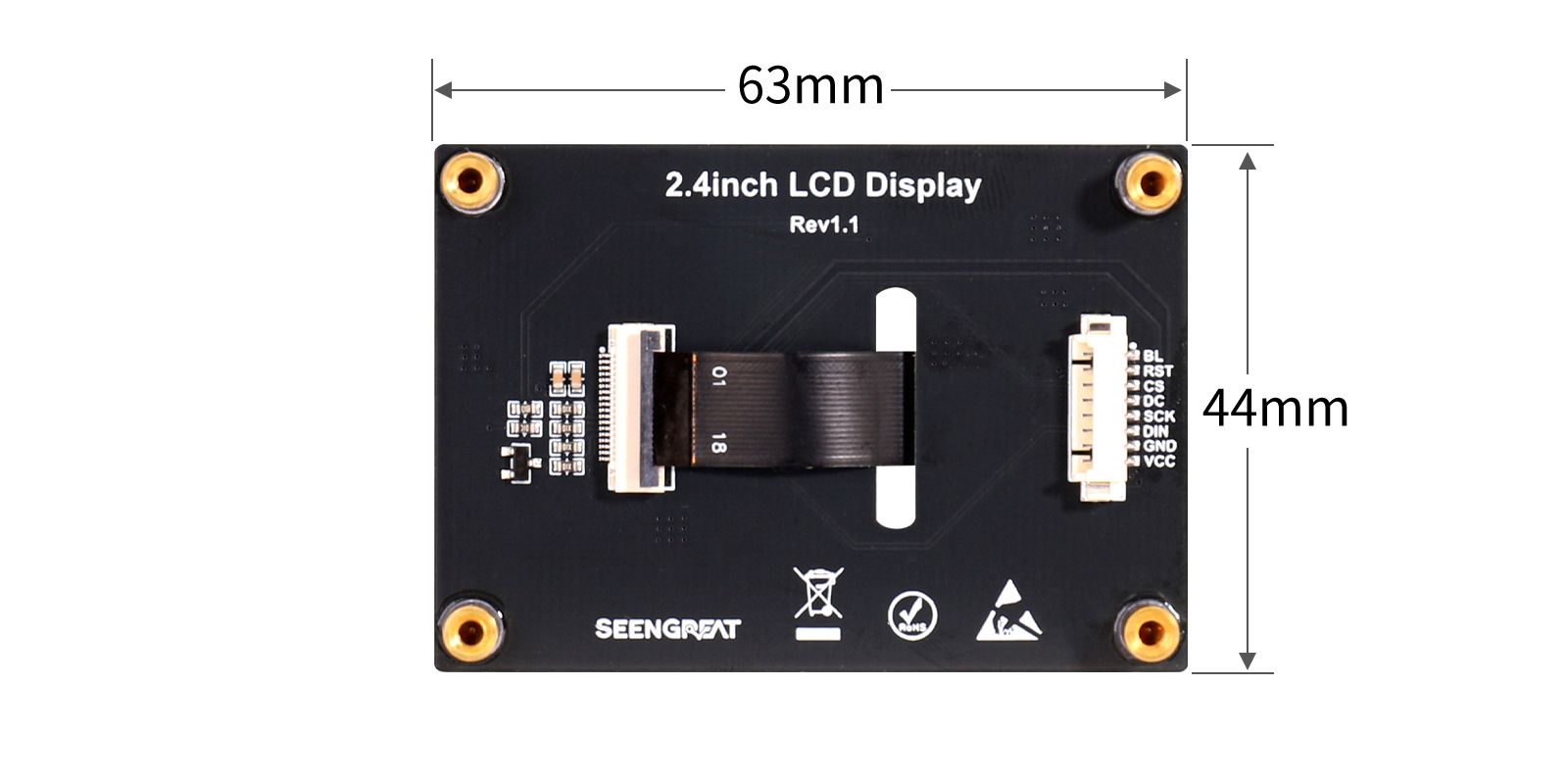
| Dimensions | 63mm (Length) × 44mm (Width) |
| Resolution | 320 × 240 |
| Communication Interface | SPI |
| Active Area (Viewing Area) | 48.96mm × 36.72mm |
| Display Colors | RGB 262K |
| Driver IC | ILI9341 |
| Supply Voltage | 3.3V / 5V |
1.4.Module Resources
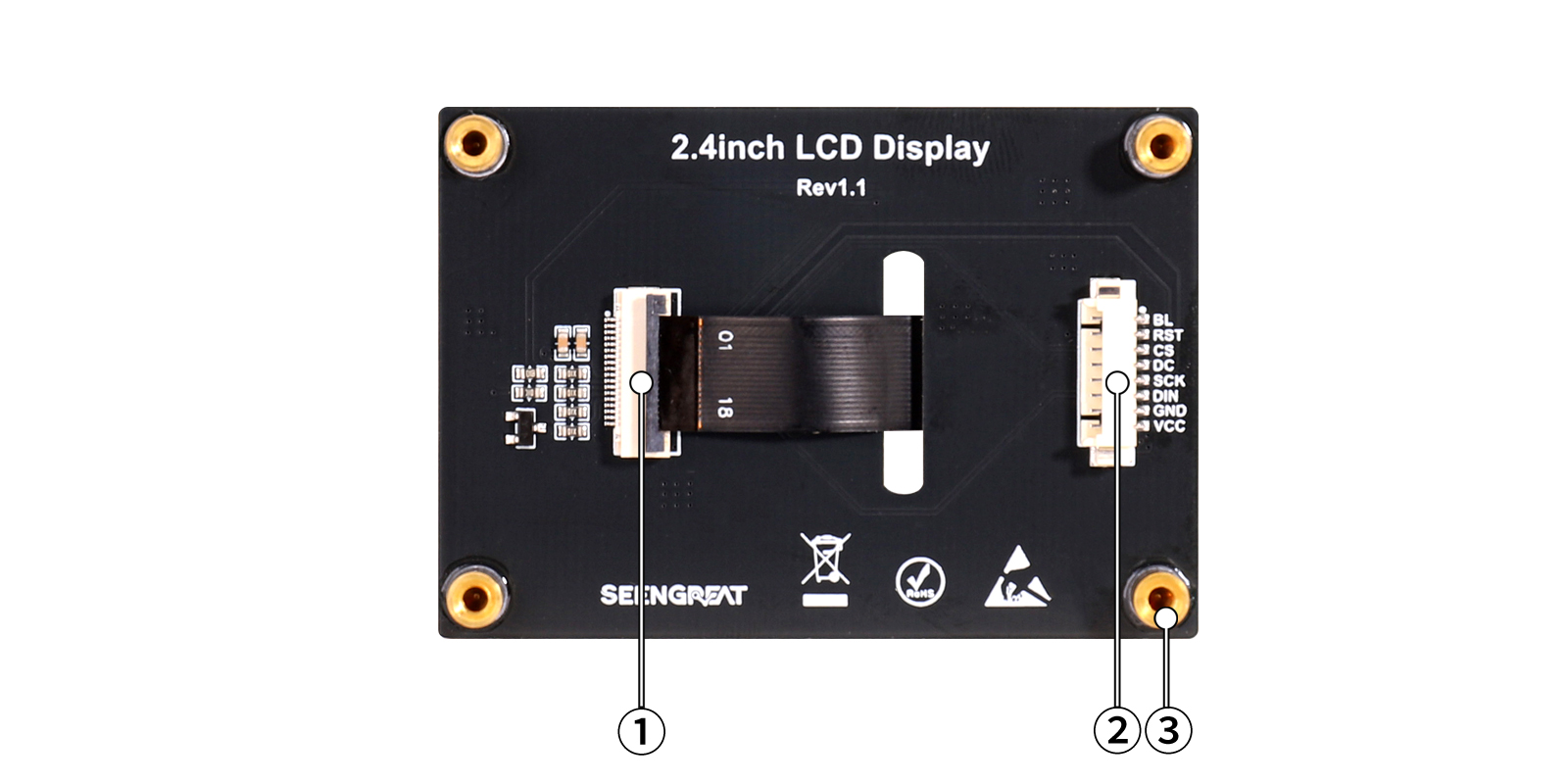 ①LCD screen connector
②Control interface: 8-pin, 1.25mm pitch connector
③M2.5 SMT brass standoff
II. Usage
2.1 Hardware Description
2.1.1 Interface Definition
Pin Name | Description |
VCC | Power Positive |
GND | Power Ground |
DIN | SPI Data Input |
SCK | SPI Clock Signal |
CS | LCD Chip Select |
DC | LCD Data/Command Select |
RST | LCD Reset Signal |
BL | LCD Backlight Control |
2.2 Raspberry Pi Demo Code
2.2.1 Raspberry Pi Hardware Connection
The demo code for the Raspberry Pi motherboard uses the wiringPi pin numbering. For the Bookworm system, BCM pin numbering is used. Connections to the Raspberry Pi are defined in the table below:
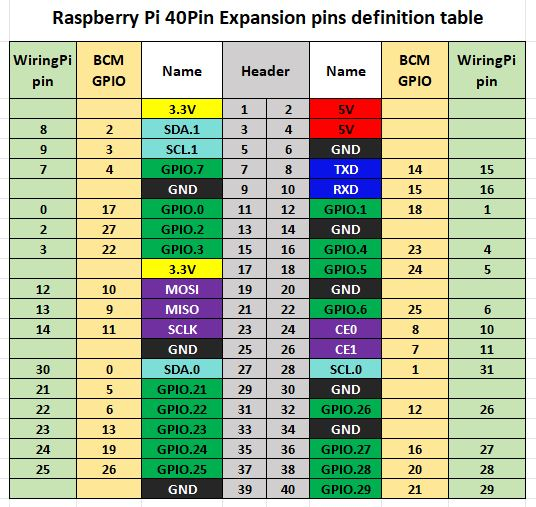
LCD Interface | BCM | wiringPi |
VCC | 3.3V | 3.3V |
GND | GND | GND |
DIN | MOSI | 12 |
SCK | SCLK | 14 |
CS | CE0 | 10 |
RST | 22 | 3 |
DC | 25 | 6 |
BL | 24 | 5 |
2.2.2 Installing Wiringpi Library
sudo apt-get install wiringpi
Wget https://project-downloads.drogon.net/wiringpi-latest.deb
sudo dpkg -i wiringpi-latest.deb
gpio -v # If version 2.52 appears, the installation is successful
For the Bullseye branch system, use the following commands:
git clone https://github.com/WiringPi/WiringPi
cd WiringPi
./build
gpio -v
Running gpio -v will show version 2.70. If it does not appear, the installation failed.
If you encounter the error "ImportError: No module named 'wiringpi'" when running Python examples, run the following commands:
For Python 2.x
pip install wiringpiFor Python 3.x
pip3 install wiringpigit clone --recursive http://github.com/WitingPi/WiringPi-Python.gitNote: The --recursive option automatically pulls submodules; otherwise, you need to download them manually. Enter the downloaded WiringPi-Python folder and run the following commands to compile and install:
For Python 2.x
sudo python setup.py installFor Python 3.x
sudo python3 setup.py install Run the command
 sudo apt install swig to install swig, then compile and install using sudo python3 setup.py install. If you see information similar to the following, the installation was successful. 
2.2.3 Installing LGPIO Library
For the Bookworm system, the demo code uses the lgpio library. The installation commands are as follows:
wget https://github.com/joan2937/lg/archive/master.zip
unzip master.zip
cd lg-master
make
sudo make install
2.2.4 Enabling SPI Interface
sudo raspi-configInterfacing Options->SPI->YesCheck enabled SPI devices:
ls /dev/spi*2.2.5 Installing Python Libraries
The demo code uses the Python 3 environment. To run the Python demo, you need to install the PIL, numpy, and spidev libraries. Enter the following commands to install:
sudo apt-get install python3-pil
sudo apt-get install python3-numpy
sudo apt-get install python3-pip
sudo apt-get install spidev
sudo pip3 install smbus
2.2.6 Running Python Demo
Navigate to the Python demo directory:
cd /home/pi/2.4inch lcd Display demo codes/RaspberryPi/lgpio/pythonsudo python 2.4inch_lcd.py2.2.7 Running C Demo
Navigate to the C demo directory, compile, and run:
cd /home/pi/2.4inch lcd Display demo codes/RaspberryPi/lgpio/c
sudo make clean
sudo make
sudo ./main
2.3 Arduino Demo Code
2.3.1 Connecting to Arduino UNO
Connect the module to the Arduino UNO according to the following table:
Module Pin | Arduino UNO | Description |
5V | 5V | Power Positive |
GND | GND | Power Ground |
SCK | D13 | SPI Clock Signal |
DIN | D11 | SPI Data Input |
CS | D10 | LCD Chip Select |
BL | D9 | LCD Backlight Control |
DC | D8 | LCD Data/Command Select |
RST | D7 | LCD Reset Signal |
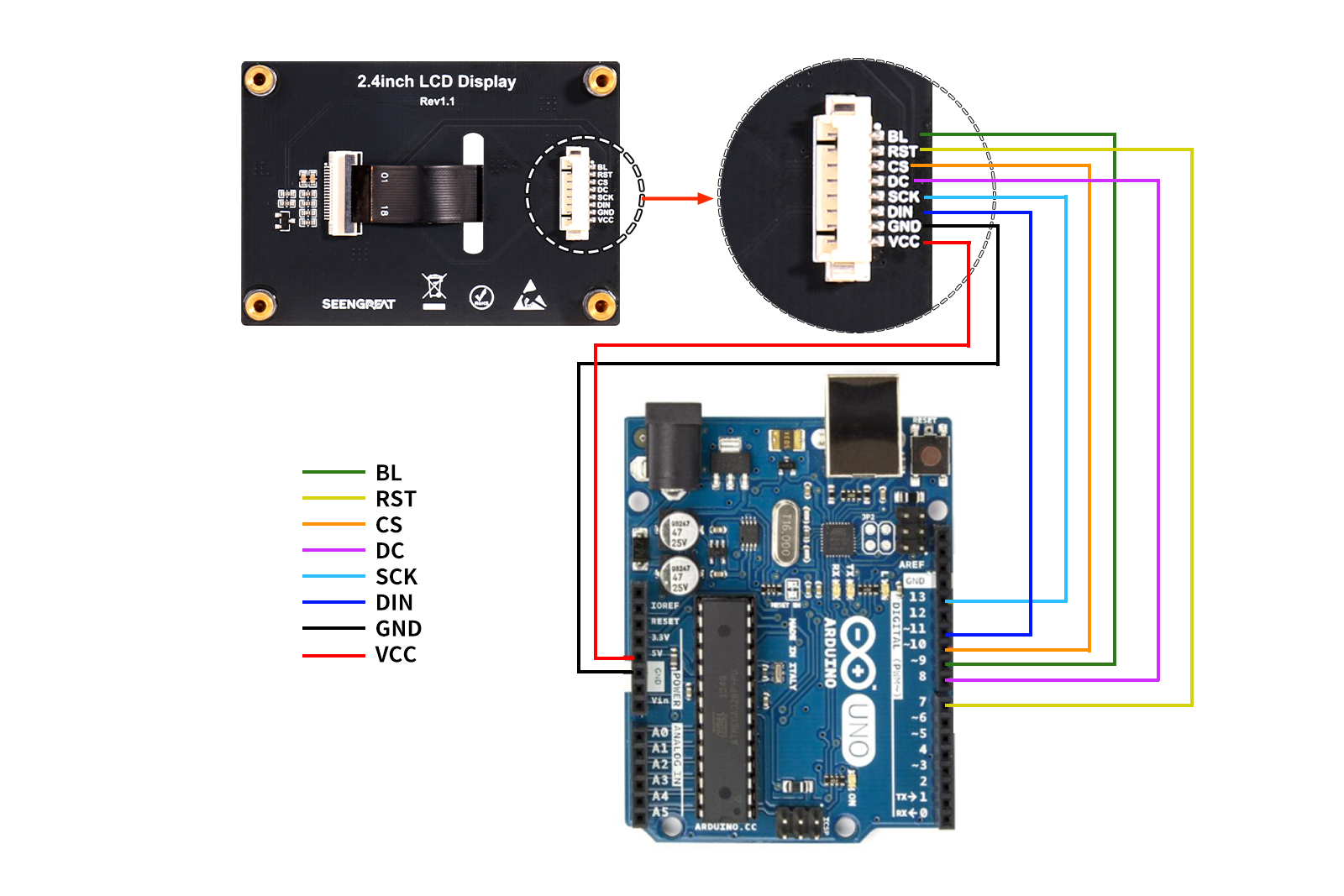
2.3.2 Uploading the Code
Select the board model and port number as shown in the figures below.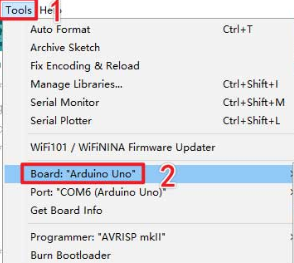
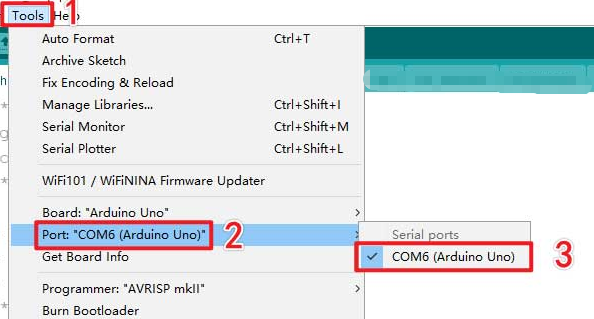
After selection, click "Compile" and upload the code to the Arduino UNO.
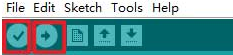 You will see the screen display lines, rectangles, filled blocks, circles, and characters.